
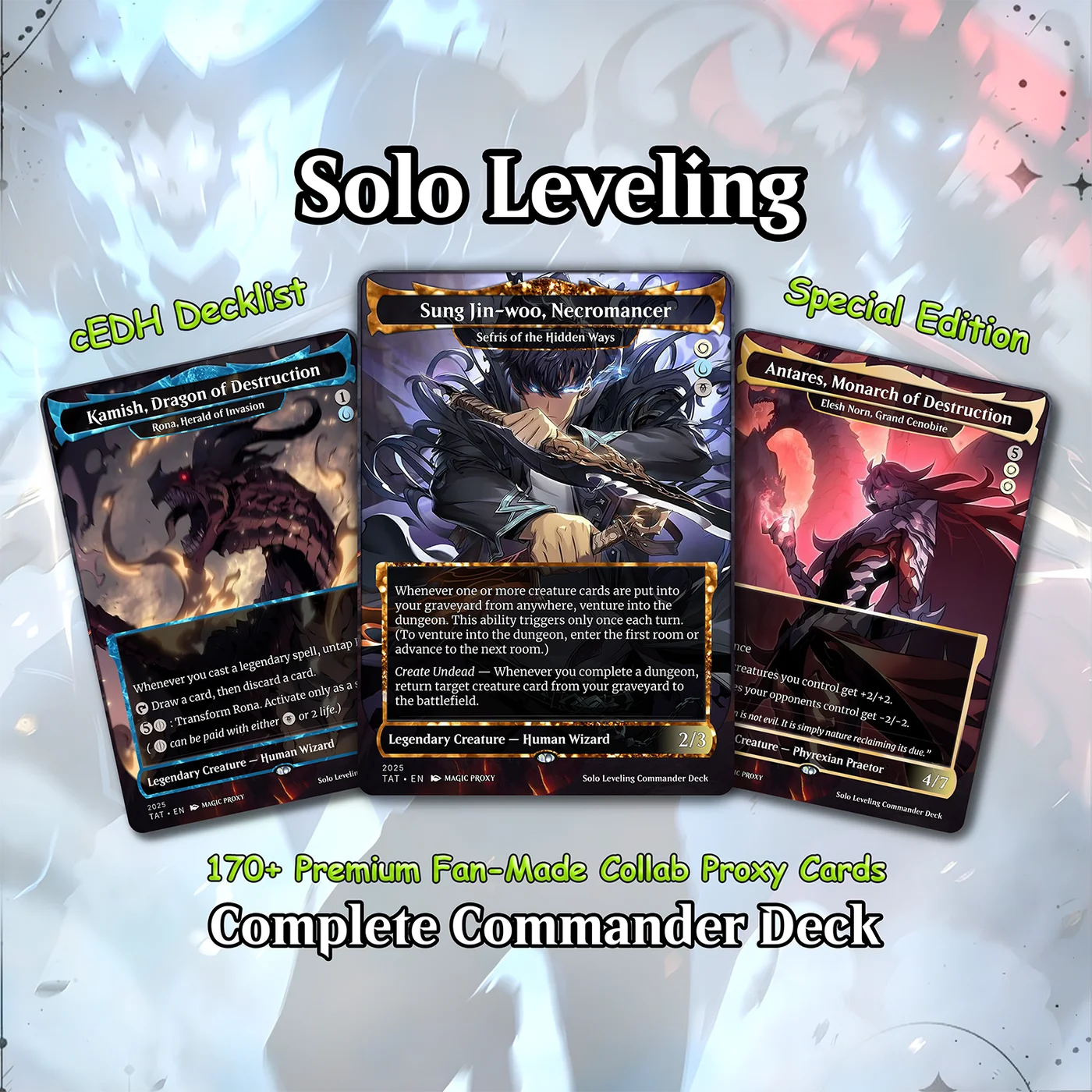


How to Play Magic: The Gathering (MTG): The Complete Beginner’s Guide
How to Play Magic: The Gathering (MTG): The Complete Beginner’s Guide

Have you ever heard of Magic: The Gathering (MTG) but never known how to play? Perhaps you’ve seen decks filled with beautifully illustrated cards, powerful mythical creatures, and incredible magical spells, but you don’t know where to begin.
Don’t worry! Magic: The Gathering is a strategic trading card game with incredible depth, but its basic rules are surprisingly easy to learn.
In this guide, we’ll walk you through everything you need to know about playing MTG, from understanding the different card types and mana system to summoning creatures, attacking opponents, and building your first deck.
Whether you’re a complete beginner or simply looking to improve your gameplay, this guide will help you take your first steps into the world of Magic: The Gathering.
1. What Is Magic: The Gathering (MTG)?
Magic: The Gathering, commonly known as MTG, is a collectible trading card game created by Richard Garfield and first published by Wizards of the Coast in 1993.
In MTG, each player takes on the role of a powerful spellcaster known as a Planeswalker. Players use magical spells, summon creatures, and harness the power of different lands to defeat their opponents.
What makes MTG special is the incredible variety of cards and strategies available. With thousands of unique cards, players can combine different abilities and mechanics to create decks that match their personal playstyles.
Why Is MTG So Popular?
- Endless Strategic Possibilities: Every game presents new challenges. There is no single strategy that guarantees victory.
- A Rich Fantasy Universe: Discover legendary creatures, dragons, powerful wizards, magical artifacts, and extraordinary fantasy worlds.
- Creative Deck Building: Build your own deck using cards that complement your preferred playstyle.
- Competitive Gameplay: Enjoy casual matches with friends or compete in organized tournaments.
- Collectible Cards: Discover beautifully illustrated cards, rare editions, special treatments, and unique collectible designs.
Magic: The Gathering is more than just a card game. It’s a combination of strategy, creativity, competition, and imagination.
2. What Do You Need to Start Playing MTG?
Before starting your first Magic: The Gathering match, you’ll need a few basic items.
2.1. A Deck
A deck is the collection of cards you use during a game.
In Standard, your main deck must contain at least 60 cards, with no maximum deck size as long as you can shuffle it without assistance. You can generally include up to four copies of any card with the same English name, except basic lands.
Different MTG formats have their own deck-building rules, so always check the requirements before building your deck.
2.2. Mana
Mana is the magical energy used to cast spells and summon creatures.
Players typically generate mana by tapping Land cards. Managing your mana efficiently is one of the most important skills in MTG.
2.3. Life Points
In a typical two-player game, each player starts with 20 life points.
Your main objective is usually to reduce your opponent’s life total to zero before they do the same to you.
2.4. Essential MTG Accessories
While not all accessories are required, they can make your gaming experience more enjoyable.
- Dice: Track counters, creature abilities, and other game effects.
- Playmat: Protect your cards and create a comfortable playing surface.
- Card Sleeves: Keep your cards protected from scratches, dirt, and damage.
- Deck Box: Store and organize your deck safely.
- Life Counter: Easily track your life total throughout the game.
3. Understanding the Five Colors of Magic: The Gathering
One of the most iconic features of MTG is its five-color mana system.
Each color represents a different philosophy, personality, and approach to gameplay. Understanding these colors will help you choose a deck that matches your preferred strategy.
White – Order and Protection
White represents peace, justice, structure, and teamwork.
Key characteristics:
- Strong defensive abilities.
- Creates multiple small creatures.
- Restores life points.
- Strengthens groups of creatures.
Playstyle: Perfect for players who enjoy defensive strategies, teamwork, and building powerful armies.
Blue – Knowledge and Control
Blue represents intelligence, knowledge, and manipulation.
Key characteristics:
- Draw additional cards.
- Counter opponents’ spells.
- Control the battlefield.
- Gain advantages through careful planning.
Playstyle: Ideal for players who enjoy strategic thinking, controlling the game, and staying several steps ahead of their opponents.
Black – Ambition and Power
Black represents ambition, sacrifice, and the pursuit of power.
Key characteristics:
- Destroys opposing creatures.
- Uses life as a resource.
- Returns creatures from the graveyard.
- Trades resources for powerful advantages.
Playstyle: Great for players who enjoy aggressive decisions, resource management, and high-risk strategies.
Red – Freedom and Aggression
Red represents passion, freedom, emotion, and explosive power.
Key characteristics:
- Deals direct damage.
- Attacks quickly.
- Creates unexpected combat situations.
- Uses powerful instant effects.
Playstyle: Perfect for players who prefer fast-paced gameplay and overwhelming opponents with aggressive attacks.
Green – Nature and Growth
Green represents nature, growth, and raw physical strength.
Key characteristics:
- Generates additional mana.
- Summons powerful creatures.
- Increases creature stats.
- Develops resources quickly.
Playstyle: Ideal for players who love summoning massive creatures and overwhelming opponents with incredible strength.
4. Understanding the Different Types of MTG Cards
To play Magic: The Gathering effectively, you need to understand the most common card types.
Land
Land cards provide the mana needed to cast spells.
You can normally play one Land card from your hand during each of your turns.
Creature
Creatures are the primary units used to attack and defend during combat.
Most Creature cards have two important statistics:
- Power: The amount of damage a creature deals in combat.
- Toughness: The amount of damage a creature can withstand before being destroyed by damage.
For example, a creature with 3/4 has 3 Power and 4 Toughness.
Instant
Instant spells can generally be cast whenever you have priority, including during your opponent’s turn.
They are particularly useful for surprising opponents, responding to threats, and changing the outcome of combat.
Sorcery
Sorceries are powerful spells that can generally only be cast during your own Main Phase when the stack is empty.
They can deal damage, destroy creatures, draw cards, and create many other effects.
Artifact
Artifacts represent magical objects, equipment, and powerful inventions.
Some provide additional mana, strengthen creatures, or create special abilities that can change the game.
Enchantment
Enchantments create ongoing magical effects that influence the battlefield or change the rules of the game.
Planeswalker
Planeswalkers are powerful characters with unique abilities.
They usually enter the battlefield with loyalty counters, which are used to activate their special abilities. Opponents can also attack your Planeswalkers directly.
5. How to Play MTG: Step-by-Step Gameplay Guide
Now that you understand the basic cards and mechanics, let’s learn how an actual Magic: The Gathering game works.
Step 1: Set Up the Game
Before starting a typical two-player match:
- Each player prepares a legal deck.
- Both players shuffle their decks.
- Determine who goes first.
- Each player draws seven opening cards.
- Players may take a Mulligan if they are unhappy with their opening hand.
In a typical two-player game, each player starts with 20 life points.
Step 2: Untap – Prepare Your Cards
At the beginning of your turn, untap all permanents you control that are tapped.
This makes your cards available for use again.
Step 3: Draw – Draw a Card
Draw one card from your library.
Important: The player who takes the first turn skips their draw step on the first turn.
Step 4: Main Phase – Play Your Cards
The Main Phase is where you can perform many important actions.
You can:
- Play a Land card.
- Cast Creature spells.
- Cast Sorceries.
- Play Artifacts.
- Cast Enchantments.
- Activate abilities and use other spells when permitted.
Managing your available mana is essential. Think carefully before spending all your resources.
Step 5: Combat Phase – Attack Your Opponent
Combat is one of the most exciting parts of Magic: The Gathering.
You can choose eligible creatures to attack your opponent.
The combat phase consists of several steps:
- Beginning of Combat: Players receive opportunities to take actions before attackers are declared.
- Declare Attackers: Choose which creatures will attack.
- Declare Blockers: Your opponent chooses which creatures will block.
- Combat Damage: Attacking and blocking creatures deal damage.
- End of Combat: The combat phase ends.
Example:
You control a creature with 4/4, while your opponent controls a creature with 2/3.
If your 4/4 creature attacks and the opponent blocks with their 2/3 creature:
- Your creature deals 4 damage to the defending creature.
- The defending creature deals 2 damage to your creature.
- Both creatures are destroyed because the damage they receive is equal to or greater than their Toughness.
Step 6: Second Main Phase – Continue Your Strategy
After combat, you enter your second Main Phase.
You can continue developing your battlefield by:
- Summoning additional creatures.
- Playing a Land if you haven’t played one this turn.
- Casting additional spells.
- Preparing for your opponent’s next turn.
Step 7: End Step – Finish Your Turn
At the end of your turn, remaining effects and abilities are handled as appropriate.
During the Cleanup Step, if you have more than seven cards in your hand, you normally discard down to seven.
After that, your opponent begins their turn.
6. How Do You Win in MTG?
There are several ways to win a game of Magic: The Gathering.
Here are some of the most common victory conditions.
1. Reduce Your Opponent’s Life Total to Zero
This is the most straightforward way to win.
Use creatures and damaging spells to reduce your opponent’s life total from 20 to 0.
2. Make Your Opponent Unable to Draw a Card
If your opponent must draw a card but their library is empty, they lose the game the next time a player would receive priority.
This strategy is commonly known as Mill.
3. Achieve a Special Win Condition
Some cards have unique abilities that allow you to win the game when specific conditions are met.
These special win conditions can create unexpected and exciting strategies.
4. Your Opponent Concedes
Players can concede at any time, ending the game and giving victory to the remaining player or players.
7. Popular Magic: The Gathering Formats
Magic: The Gathering offers many different formats, each with its own deck-building rules and gameplay experience.
Understanding these formats will help you choose the right way to play.
Standard
- Main deck contains at least 60 cards.
- Uses cards from currently legal Standard sets.
- The available card pool changes as sets rotate.
- Great for players who enjoy evolving competitive strategies.
Commander (EDH)
- Usually played with 3–5 players, although other player counts are possible.
- Each deck contains exactly 100 cards, including one Commander.
- Generally, only one copy of each card is allowed, except basic lands and cards that explicitly allow multiple copies.
- Each player starts with 40 life points.
- Decks are built around a legendary creature or another eligible Commander.
Commander is one of the most popular MTG formats because of its creativity, social gameplay, and incredible variety of strategies.
Modern
- Main deck contains at least 60 cards.
- Includes a large card pool from eligible Magic sets.
- Features powerful combinations and complex strategies.
- Popular among competitive players.
Legacy
- Allows cards from a very extensive range of Magic’s history.
- Features powerful interactions and advanced strategies.
- Uses a specific banned list to maintain the format’s rules and balance.
Draft
Draft is a Limited format where players select cards from Booster Packs during the event.
Instead of bringing a fully constructed deck, you build your deck using the cards you draft.
It’s a fantastic way to discover new cards, test your skills, and improve your deck-building abilities.
8. Essential MTG Tips for Beginners
If you’re new to Magic: The Gathering, don’t try to learn every rule and mechanic at once.
Start with the basics and gradually develop your skills.
Here are some helpful tips:
1. Start With a Simple Deck
Choose a Starter Kit or a beginner-friendly deck with straightforward mechanics.
This allows you to focus on understanding the rules instead of dealing with too many complicated interactions.
2. Learn How to Manage Mana
Don’t spend all your mana just because you can.
Sometimes, keeping mana available for an Instant spell can help you respond to your opponent’s actions.
3. Read Every Card Carefully
A single keyword or ability can completely change how a card works.
Take your time to understand what each card does before using it.
4. Think Before Attacking
Before declaring attackers, consider your opponent’s creatures and calculate the potential losses.
A poorly planned attack can cost you valuable cards.
5. Learn From Every Match
Every game provides an opportunity to improve.
Pay attention to your mistakes, discover new combinations, and experiment with different strategies.
The more you play, the better your understanding of MTG will become.
9. Essential MTG Terms Every Beginner Should Know
Understanding common MTG terminology will make learning the game much easier.
| Term | Meaning |
|---|---|
| Deck | Your collection of cards used in a game |
| Hand | Cards currently in your hand |
| Graveyard | The area where discarded and destroyed cards usually go |
| Battlefield | The area where permanents are played |
| Library | Your face-down draw pile |
| Exile | An area where cards are placed when an effect exiles them |
| Tap | Turn a card sideways to indicate it has been used |
| Untap | Return a tapped card to its normal upright position |
| Cast | Play a spell by paying its costs |
| Summon | Common informal term for putting a creature onto the battlefield |
| Counter | Prevent a spell from resolving |
| Creature | A card type representing creatures that can fight |
| Mana | Magical energy used to cast spells |
| Commander | Your designated legendary card in Commander format |
10. Start Your Magic: The Gathering Journey Today!
Magic: The Gathering is more than just a trading card game. It’s an incredible combination of strategy, creativity, imagination, and competition.
Whether you enjoy summoning massive dragons, controlling your opponents with powerful spells, or building an unstoppable army of creatures, MTG offers a playstyle for everyone.
You don’t need hundreds of cards to get started. All you need is a beginner-friendly deck, a friend to play with, and a little patience to learn the rules.
Choose your first deck, enter the world of Magic: The Gathering, and discover the power of becoming a Planeswalker!
Frequently Asked Questions (FAQ)
Q: How much does it cost to start playing MTG?
A: The cost depends on the products and format you choose. Beginners can start with a Starter Kit or a preconstructed deck designed for new players.
Q: Is Magic: The Gathering difficult to learn?
A: The basic rules are relatively easy to understand. However, MTG offers incredible strategic depth, meaning there is always something new to discover as you improve.
Q: Can you play MTG with only two players?
A: Absolutely! Two-player games are one of the most common ways to experience Magic: The Gathering.
Q: Is Commander suitable for beginners?
A: Yes! Commander can be a fantastic format for beginners, especially when playing with friends. However, it’s helpful to understand the basic rules first because Commander involves additional mechanics and interactions.
Q: Can I use non-original MTG cards?
A: This depends on where and how you play. Some casual playgroups allow proxy cards, but official tournaments generally require cards that meet the applicable Wizards of the Coast tournament rules.
Always check the rules of your playgroup or event before using proxy cards.
Shop the Forge
View all decks →
Bloodborne Deck
Landfall +1 Counter Deck
Yuriko Ninja Tribal Deck
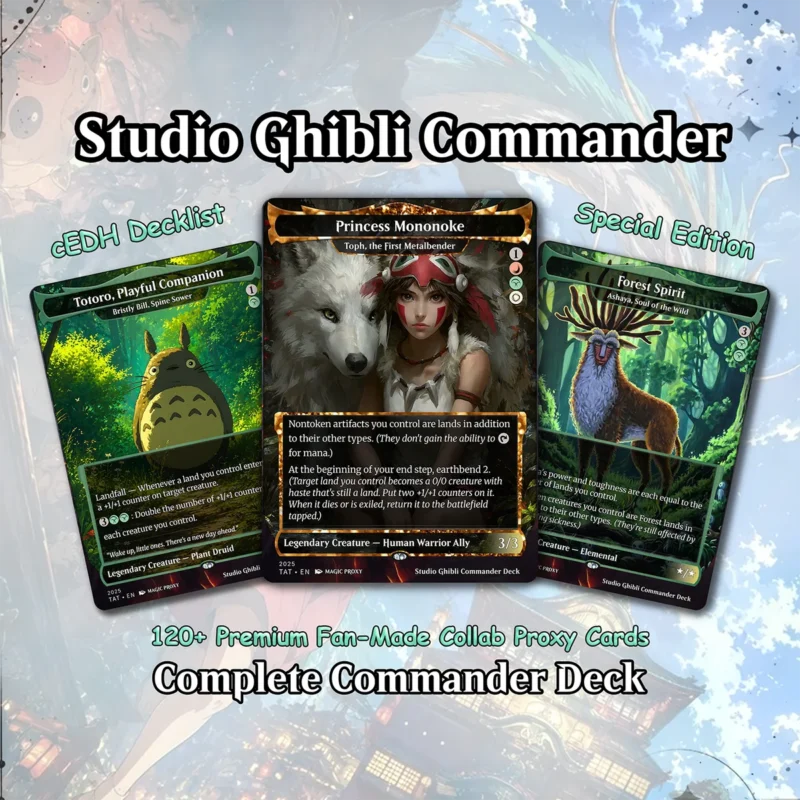
Studio Ghibli Miyazaki's Vision Deck
You might also like
All articles → Proxy Tips
How to Build a Magic: The Gathering Deck From Scratch
A strong deck doesn't come from stuffing in the most expensive cards. It comes from a clear skeleton: the right number of lands, enough ramp, enough…
Read more →