





How to Build a Magic: The Gathering Deck From Scratch
How to Build a Magic: The Gathering Deck From Scratch

A strong deck doesn’t come from stuffing in the most expensive cards. It comes from a clear skeleton: the right number of lands, enough ramp, enough card draw and enough answers to your opponents. This guide walks through 5 steps to build a Magic: The Gathering deck, with 3 illustrations you can save for reference while you build.
If you’re new to the game, treat the numbers below as a starting point. After a few test games, you’ll learn where your deck needs more and where it needs less.
Step 1: Pick a format and a win plan
The format sets the size of your deck, so choose it first.
| Format | Deck size | Max copies per card | Starting life |
|---|---|---|---|
| Commander (EDH) | Exactly 100, including 1 commander | 1 (except basic lands) | 40 |
| Standard, Pioneer, Modern | At least 60 | 4 (except basic lands) | 20 |
| Limited (Draft, Sealed) | At least 40 | No limit | 20 |
Next, answer one question: how does this deck win? The three most common archetypes are:
- Aggro: attacks fast with cheap creatures and wants to end the game by turn 6 or 7.
- Midrange: high-quality threats in the middle of the curve that trade efficiently, then take over.
- Control: counterspells, removal and lots of card draw; wins late with a few very powerful cards.
In Commander, your commander is usually the compass: its abilities point to the theme for the other 99 cards.
Step 2: Build the skeleton
For Commander, a safe skeleton is 37 lands, 10 ramp, 10 card draw, 8 removal, 3 board wipes, 31 theme cards and 1 commander. The image below splits all 100 cards by exactly those ratios.
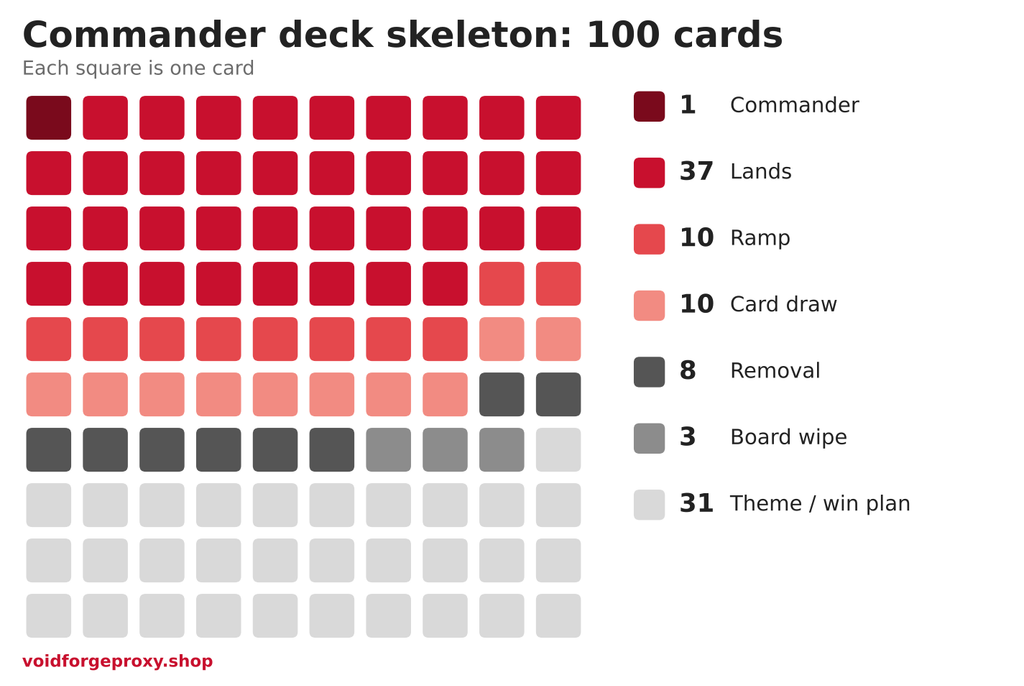
- Lands (36–38): go lower and you’ll miss land drops; lean toward 38 if your commander is expensive.
- Ramp (about 10): cards that get you extra mana early, like mana rocks or land-search spells.
- Card draw (about 10): keeps your hand from running empty.
- Removal (8–10): deals with one specific threat.
- Board wipes (2–3): resets the board when opponents get ahead.
- Theme (the rest): the cards that actually carry out your win plan.
For 60-card decks, 24 lands is a common starting point. Cheap aggro decks can go down to 20–22; control decks full of expensive cards go up to 25–26.
Step 3: Balance your mana curve
Your mana curve is how many cards you have at each mana value. A good curve puts most of its cards at 2–3 mana, so you always have something to do each turn.
The image below shows an example for the 62 nonland cards of a midrange Commander deck: 8 one-drops, 16 two-drops, 14 three-drops, 11 four-drops, 7 five-drops and 6 cards at 6 or more. The average mana value is about 3.
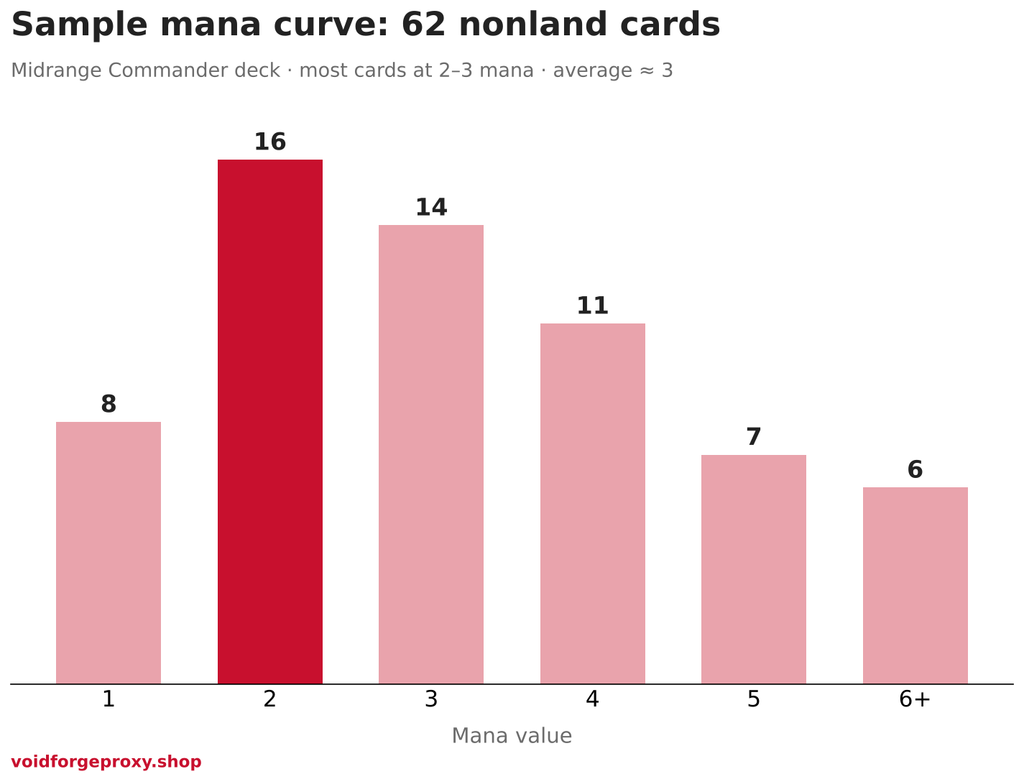
Quick check: if your 5+ columns together are taller than your 2-drop column, the deck will probably feel slow. Cut some expensive cards or add more ramp.
Step 4: Choose cards, make cuts and check your colors
Most deckbuilders start with a list of 120–150 candidate cards, then cut down to 100 (or 60). When you have to cut, ask three questions about each card:
- Does it serve the win plan?
- Is there a cheaper card that does the same job?
- Is it still useful when drawn late in the game?
Then check your colors. Count the colored mana symbols on your nonland cards and split your lands in the same ratio. For example, if a two-color deck has 60% red symbols and 40% white, about 60% of your mana sources should produce red. Decks with three or more colors need dual lands or land-search cards to avoid getting color-screwed.
Step 5: Playtest with proxies and tune
No list is perfect on paper; you only know whether a deck is good by playing it. Proxies let you test the full deck before spending money on the real copies of its most expensive cards.
The process is a 4-step loop, shown in the image below:
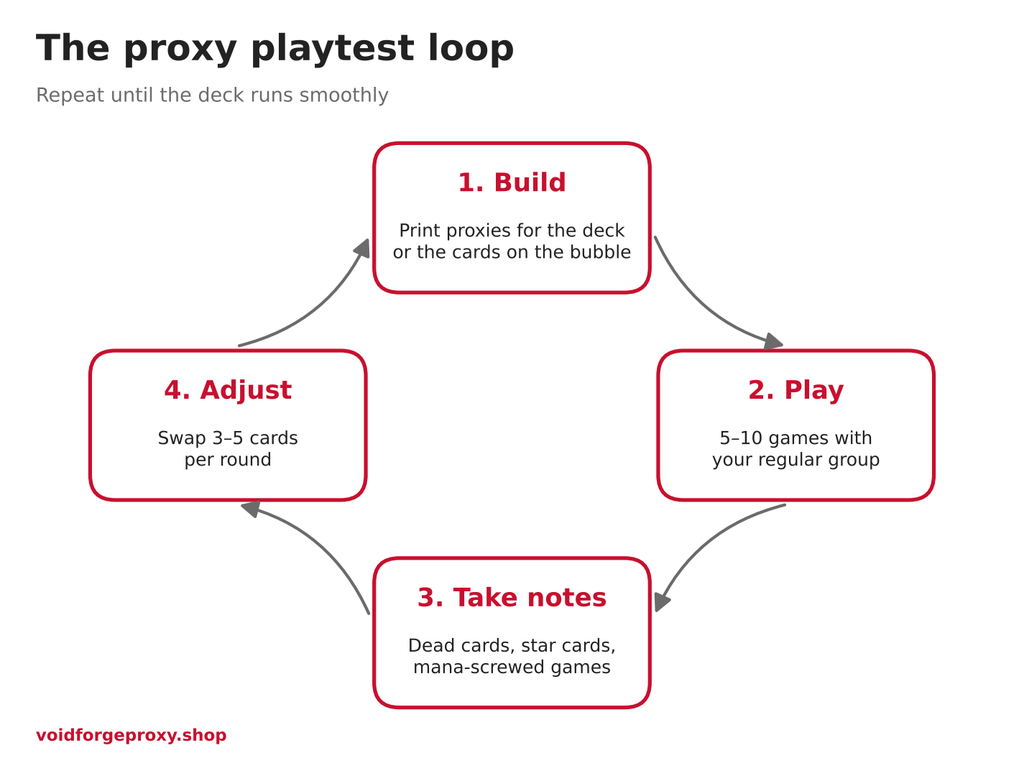
- Build: print proxies for the whole deck, or just the cards you’re unsure about.
- Play: at least 5–10 games with your regular playgroup.
- Take notes: which cards got stuck in hand, which ones always shined, which games you were mana-screwed.
- Adjust: swap 3–5 cards per round; don’t rebuild the whole deck at once.
Note: proxies are for casual play and playtesting. Sanctioned tournaments don’t allow them, so always ask before bringing them to a store or local event.
Start building today
In short: pick a format, build the skeleton by the ratios, balance your mana curve, cut with purpose, then playtest and tune. Save the three illustrations in this post as a checklist for your next build.
Got a decklist ready? Send it to VoidForge Proxy at contact@voidforgeproxy.shop to get your proxies printed and bring your new deck to the table.atios.
Shop the Forge
View all decks →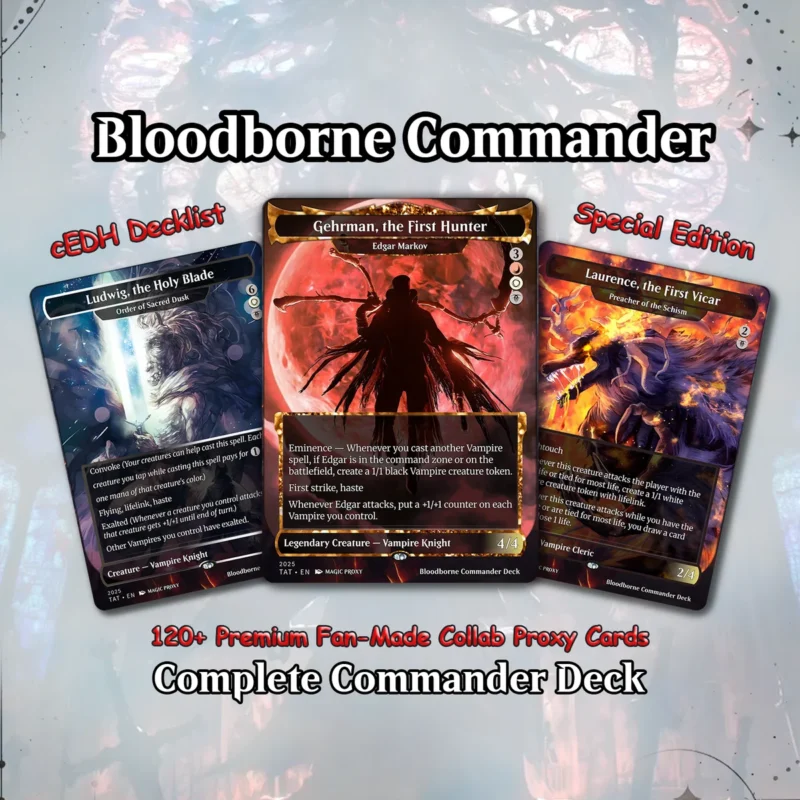
Bloodborne Deck
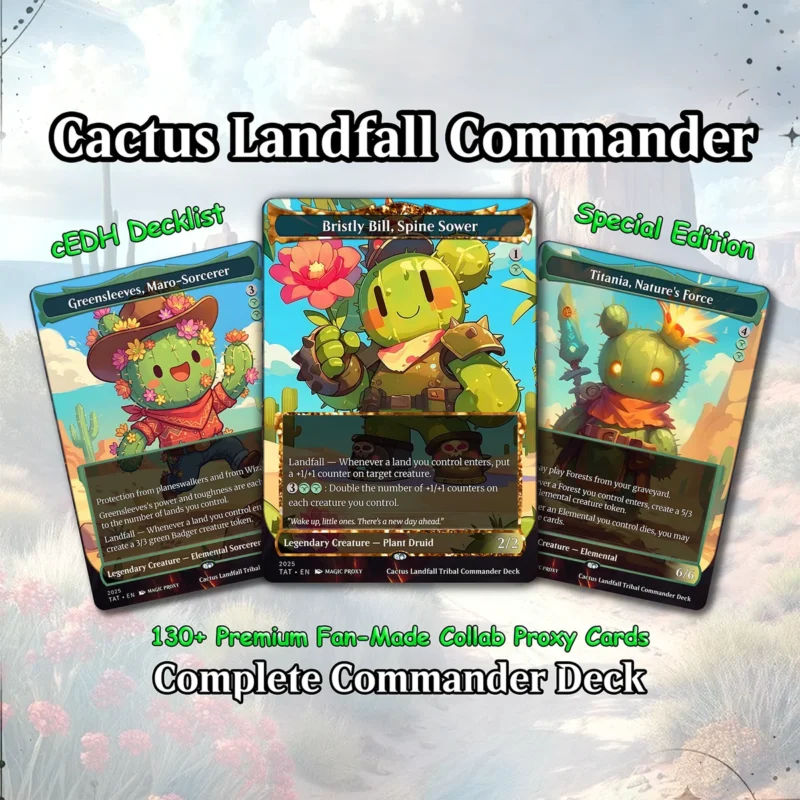
Landfall +1 Counter Deck
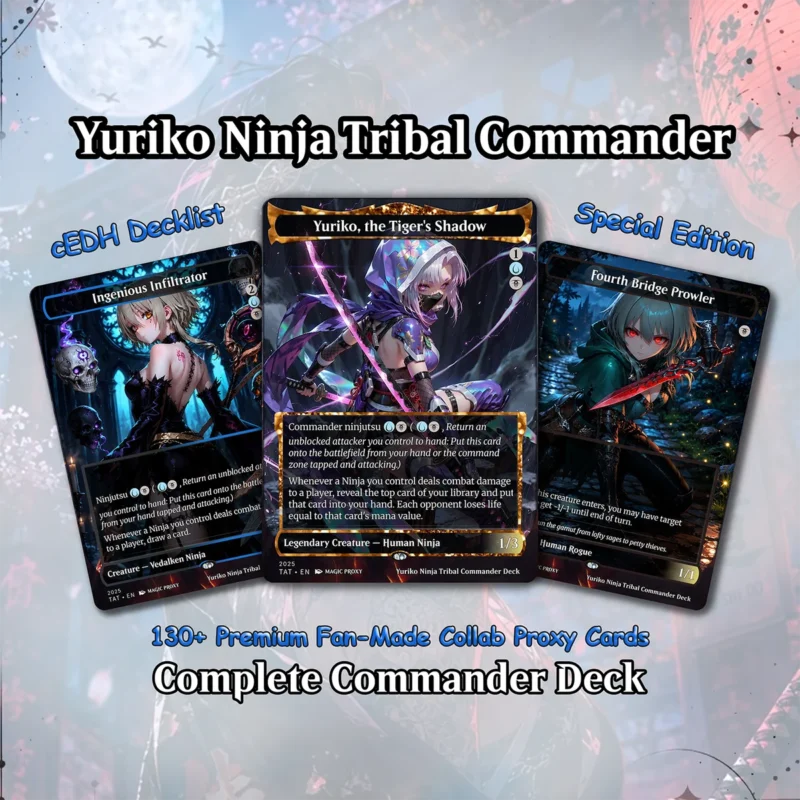
Yuriko Ninja Tribal Deck

Studio Ghibli Miyazaki's Vision Deck
You might also like
All articles → Deck Guides
How to Play Magic: The Gathering (MTG): The Complete Beginner’s Guide
Have you ever heard of Magic: The Gathering (MTG) but never known how to play? Perhaps you've seen decks filled with beautifully illustrated cards, powerful mythical…
Read more →